






March 17, 2026 | Uncategorized
Best Cities in the GTA to Invest in Real Estate in 2026
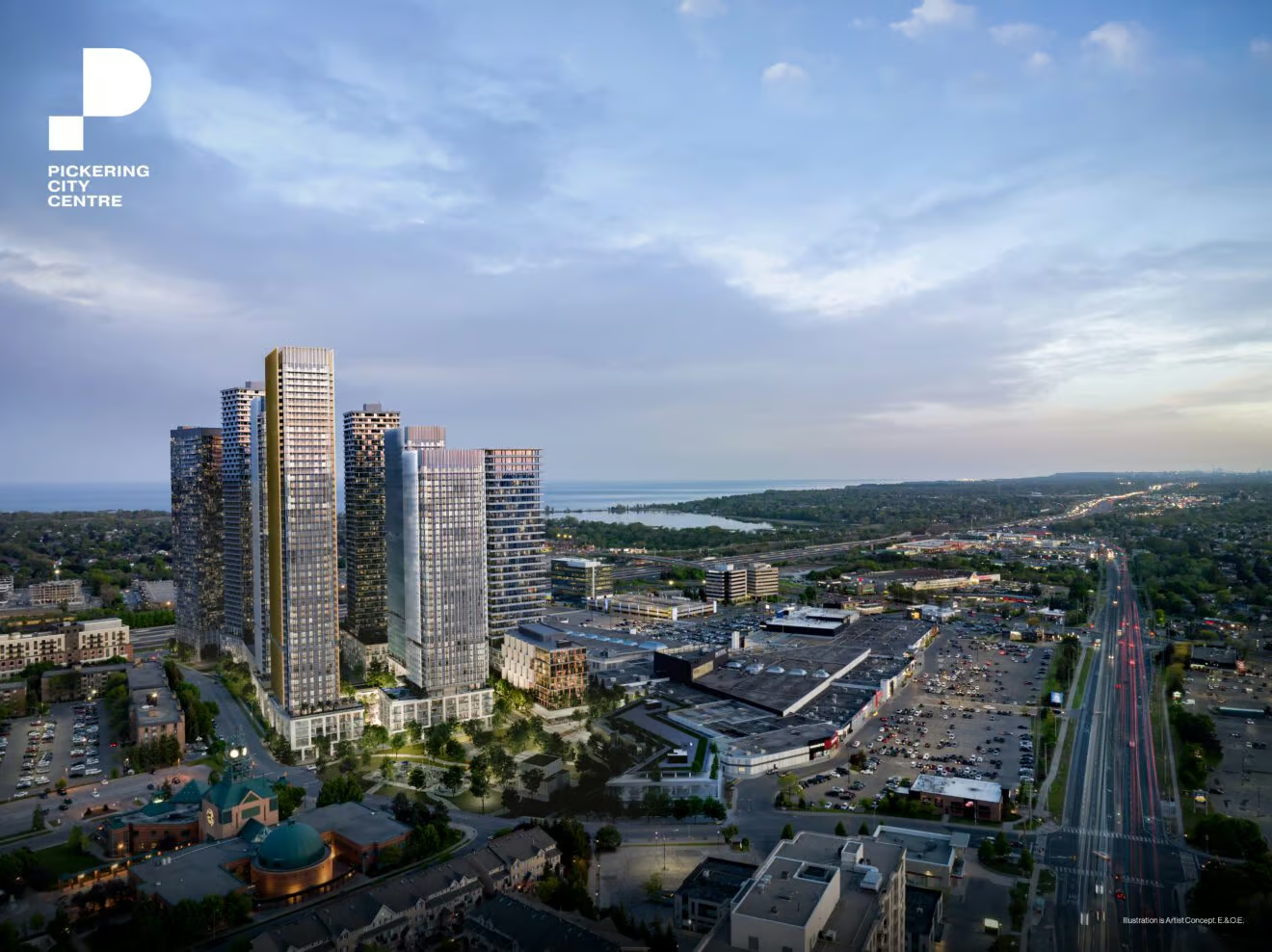
Table of Contents
- Why Invest in GTA Real Estate in 2026?
- What to Look for in a GTA Investment City
- Top Cities in the GTA for Real Estate Investment in 2026
- Brampton
- Pickering and Ajax
- Hamilton
- Barrie
- Mississauga
- Oshawa
- Investment Tips for GTA Real Estate Buyers
- Frequently Asked Questions

The Greater Toronto Area (GTA) remains one of the most dynamic real estate investment regions in North America. With population growth, infrastructure expansion, immigration-driven demand, and evolving urban development, savvy investors who choose the right city can still generate excellent long-term returns in 2026.
But not all GTA cities are created equal. Some are primed for appreciation, others offer strong rental yields, and a few offer both. In this guide, we break down the best cities in the GTA to invest in real estate in 2026 — backed by market fundamentals, development trends, and demographic data.
Why Invest in GTA Real Estate in 2026?
Despite market corrections and interest rate volatility in recent years, the GTA real estate market continues to be supported by strong structural fundamentals:
- Population growth: Canada continues to welcome hundreds of thousands of immigrants annually, with the GTA absorbing the largest share
- Housing supply shortage: Ontario is chronically undersupplied, with housing starts failing to keep pace with population growth
- Infrastructure investment: Billions in transit and highway expansion are driving up values in previously underserved areas
- Interest rate stabilization: With inflation largely under control, borrowing conditions have improved from their 2023 peaks
- Remote work evolution: Buyers continue to look beyond Toronto’s core for value, driving outer-GTA markets
What to Look for in a GTA Investment City
Before committing to an investment market, evaluate the following factors:
- Population growth rate — is the city growing faster than the provincial average?
- Employment base — is there a diverse mix of employers and industries, or dependence on a single sector?
- Transit access — proximity to GO Transit, subway, or LRT dramatically impacts value and rental demand
- Development activity — new commercial, industrial, and residential development signals economic confidence
- Rental vacancy rate — lower vacancies mean stronger rental demand and pricing power for landlords
- Price-to-rent ratio — markets with lower ratios offer better immediate cash flow
Top Cities in the GTA for Real Estate Investment in 2026
1. Brampton — High Demand, Diverse Growth
Brampton remains one of the fastest-growing cities in Canada, with a young, growing immigrant population driving sustained demand for housing. Key investment drivers include:
- Strong population growth — Brampton is on track to reach 1 million residents this decade
- Significant industrial and logistics sector growth creating employment
- Plans for a new Ryerson (now TMU) campus campus driving student rental demand
- Relatively affordable prices compared to neighbouring Mississauga
- Excellent highway access (410, 407, 401) and GO Transit service
Best investment type in Brampton: Semi-detached homes for rental, townhouses, and secondary suite properties offer strong returns.
2. Pickering and Ajax — Durham Region’s Rising Stars
The Durham Region has been one of the best-performing GTA investment markets over the past decade, and that momentum continues in 2026:
- Pickering City Centre — a massive mixed-use development underway that will transform the waterfront and city core
- Highway 407 East extension has dramatically improved commuter access
- Lower price points than Toronto, Mississauga, and Markham make entry more accessible
- Strong rental demand from commuters, families, and healthcare workers at Lakeridge Health
- Ajax continues to attract young families seeking affordable ground-oriented homes
3. Hamilton — The Value Play With Long-Term Upside
Hamilton sits at the western edge of the GTA and has undergone a remarkable transformation over the past decade. While prices have corrected from their 2022 peak, the long-term investment case remains compelling:
- A large student population from McMaster University and Mohawk College fuels rental demand
- LRT project (when complete) will reshape transit access and support urban intensification
- Strong arts, culture, and hospitality sector driving revitalization of the lower city
- Relative affordability compared to Toronto with strong rental yields available
- Growing tech and health sciences employment base
4. Barrie — North GTA Growth Corridor
Barrie has evolved from a cottage country gateway into a full-fledged commuter city with its own strong employment base:
- GO Train service to Union Station makes it viable for Toronto commuters
- Significant growth in healthcare, education, and manufacturing employment
- Lower average home prices relative to the core GTA
- Georgian College creates a perpetual rental demand base
- Strong population growth as buyers seek affordability further from Toronto
5. Mississauga — Steady Appreciation, Strong Fundamentals
Mississauga may not offer the same value plays as outer-GTA cities, but its fundamentals make it one of the most stable investment markets in the region:
- Canada’s 7th largest city with a diversified economic base anchored by financial services, pharma, and logistics
- Mississauga City Centre LRT Hurontario line now operational, transforming the corridor
- Strong rental demand driven by employment, proximity to Pearson Airport, and immigrant settlement
- Port Credit and Lakeview Village waterfront redevelopment adding significant value to east Mississauga
6. Oshawa — Affordable Entry With Improving Infrastructure
Oshawa continues to offer some of the best value for real estate investors in the GTA extended area:
- Lowest average home prices in the Durham Region
- University of Ontario Institute of Technology (Ontario Tech) creates strong student rental demand
- Growing health sciences and manufacturing employment
- Highway 407 East extension connecting to Highway 115 improving commuter access
- Strong cap rates available on duplexes and multiplexes for income investors
Investment Tips for GTA Real Estate Buyers in 2026
- Focus on cash flow first — don’t rely solely on appreciation; ensure the numbers work today
- Research transit-oriented development corridors — properties near future transit stops tend to outperform
- Consider secondary suites — properties with legal basement apartments significantly improve rental income potential
- Think long-term — the GTA has consistently rewarded patient, long-term investors
- Work with a local expert — market conditions vary street by street in the GTA; local knowledge is invaluable
Frequently Asked Questions
Is it still a good time to invest in GTA real estate in 2026?
For long-term investors, yes. While short-term price volatility exists, the fundamental supply shortage, population growth, and improving interest rate environment support long-term value appreciation across most GTA markets.
What type of property gives the best return in the GTA?
Multiplexes, semi-detached homes with secondary suites, and purpose-built rentals tend to offer the best combination of cash flow and long-term appreciation in the current GTA market.
Investing in GTA real estate in 2026 requires careful market selection and strategic thinking. Whether you’re a first-time investor or an experienced landlord, Team Rajpal has the local expertise to help you find the right opportunity. Get in touch with our team today.
For broader Ontario real estate market data, visit the Toronto Regional Real Estate Board (TRREB).
Disclaimer: This article is for informational purposes only and does not constitute financial or investment advice. Real estate investments carry risk. Always conduct thorough due diligence and consult qualified professionals before investing.

Have Questions?
Reach out to our experts! Whether you need help with a transaction or you’re just looking for market information, we’re here to help.