





August 20, 2026 | Market Reports
Durham Region Real Estate Market Forecast for 2026 and Beyond
Every buyer and seller we talk to right now wants the same thing, a straight answer on the Durham Region real estate market forecast 2026 and where it is actually heading. So here is our honest read, built on current pricing data, inventory trends, and the region’s own long term growth planning, rather than guesswork.
Durham Region Real Estate Market Forecast 2026: Steady, Not Explosive
Durham’s average home price sat at $834,312 in July, and the region is currently sitting in balanced territory at roughly 4.5 months of inventory absorption, the sweet spot between a buyer’s market and a seller’s market. Most forecasters are projecting 4 to 6 percent price growth across Durham through 2026, which is a healthy, sustainable pace rather than the kind of runaway spike that tends to correct itself hard a year or two later.
A Bank of Canada rate that has settled at 2.25 percent is a big part of that story. Financing conditions are considerably friendlier than they were even eighteen months ago, and that is starting to pull more buyers back into the market, which in turn is putting gentle upward pressure on prices as competition returns for well priced homes.
Watch For an Inventory Wave
One trend worth flagging for anyone planning a move in the next year is what some analysts are calling an inventory wave. A significant number of homeowners who locked in mortgage rates under 3 percent back in 2020 and 2021 are expected to re enter the market as personal circumstances change, life events do not wait for perfect rates forever. As that inventory comes online, absorption rates are expected to stabilize closer to 2.5 months, which would keep the market balanced rather than tipping sharply toward buyers or sellers.
City by City, the Forecast Is Not Uniform
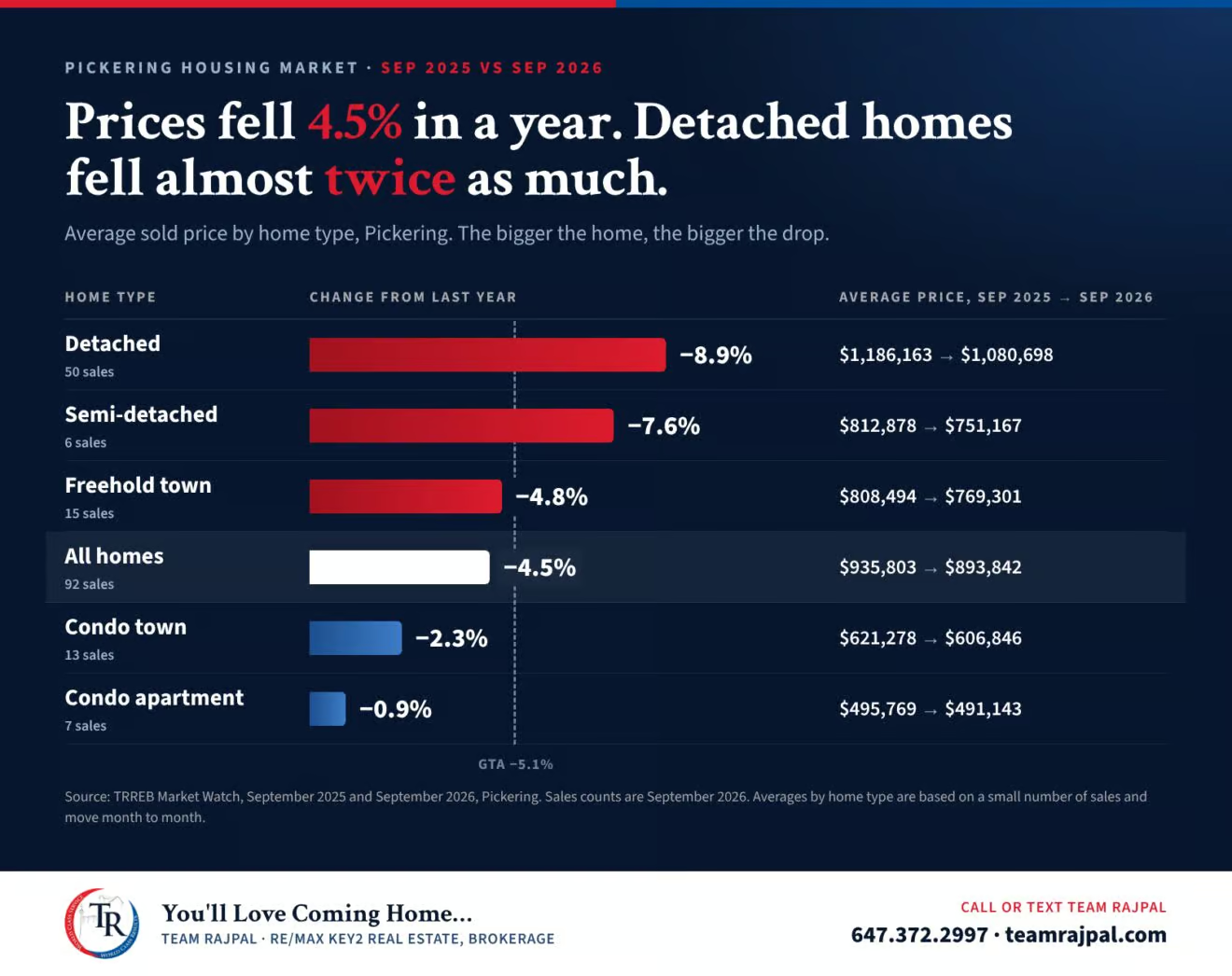
Averages hide a lot, and Durham Region is a good example of why. Pickering currently carries the highest average price in the region at $951,065 and actually gained value month over month this summer even as sales slowed, a trend tied directly to the Seaton community and the Durham Live development bringing tens of thousands of new residents and jobs to the city over the next two decades. Ajax posted the strongest momentum of any city in the region, prices up 4.45 percent and sales up over 15 percent in a single month. Whitby is holding steady in the middle at $894,257, with detached homes in the $900,000 to $1.2 million range still drawing multiple offers when priced well. Oshawa remains the most affordable core city at $693,677, supported by a stable manufacturing employment base.
Further out, Uxbridge’s luxury market is projected to reach an average detached price near $1.45 million by mid year, growing a more modest 3 percent annually, which is typical of how higher end segments tend to move slower than the broader market regardless of city.
The Missing Middle Will Likely Outperform
Semis and townhomes, sometimes called the missing middle, are expected to keep outperforming the broader market through the rest of 2026, particularly in communities with GO train access such as Clarington and Bowmanville. That trend is worth watching closely if you are choosing what type of property to buy rather than just which city.
Beyond 2026: A Region Planning for 1.3 Million People
The longer term forecast is arguably more important than any single year. Under the Region’s own Envision Durham official plan, Durham’s population is expected to cross 1.3 million residents over the next thirty years, supported by a target of roughly 236,400 new jobs by 2051, an annual employment growth rate of about 2.1 percent. Growth is being concentrated in specific zones, including Pickering East and Ajax West, and Whitby South and Oshawa South, meaning the infrastructure, transit, and housing investment already being planned is not speculative, it is tied to a formal regional growth strategy with real timelines attached.
That is the kind of tailwind that tends to support real estate values over a much longer horizon than any single quarterly report can capture.
Seasonal Outlook Through the Rest of 2026
Expect a fairly typical rhythm for the remainder of the year. Multiple offer situations will likely stay limited to well priced, move in ready homes in strong locations rather than becoming the norm across the board. Late summer tends to bring a seasonal plateau as buyer activity slows slightly, before picking back up in the fall. Some minor uncertainty tied to broader economic and political events outside Canada could add short term noise heading into winter, but nothing in the current data suggests it would meaningfully alter the region’s core trajectory.
Want a Forecast Specific to Your Situation
Regional forecasts are useful, but they are not a substitute for knowing what is happening on your specific street. We update our read on this market constantly and would rather give you a straight answer than a sales pitch. Book a consultation with Team Rajpal to talk through your timeline, or explore current listings across Durham Region here.
For the full Envision Durham growth plan details, visit the Region of Durham’s planning page.

Have Questions?
Reach out to our experts! Whether you need help with a transaction or you’re just looking for market information, we’re here to help.