





May 27, 2026 | Uncategorized
How to Buy a Home in Canada as a New Immigrant or Permanent Resident
How to buy a house in Ontario as a new immigrant permanent resident — this is a question that thousands of newcomers search for every year, and one that very few local real estate agents answer clearly. If you’re a new immigrant or permanent resident in Canada wondering how to buy a home, this complete guide walks you through mortgage eligibility, required documents, down payments, and why Pickering and Durham Region are ideal destinations for newcomer families.
Pickering, Ajax, and the broader Durham Region have become one of the most popular destinations for new immigrants and South Asian families relocating from the GTA. The combination of newer housing stock, strong school systems, growing community infrastructure, and slightly more accessible prices than Toronto makes this area a natural fit.
Can New Immigrants Buy a Home in Canada?
Yes — absolutely. There is no citizenship requirement to buy property in Ontario. As a permanent resident, you have the same legal right to purchase real estate as any Canadian citizen. Even some non-permanent residents (those on work permits or study permits) can buy homes in Canada under certain conditions.
That said, how to buy a home in Canada as a new immigrant or permanent resident involves navigating a few specific requirements around mortgage financing that don’t apply to long-established residents. Let’s start there.
Getting a Mortgage as a New Immigrant or Permanent Resident in Ontario
The biggest challenge most newcomers face isn’t finding the home — it’s qualifying for a mortgage. Canadian lenders want to see a credit history, and if you just arrived, you simply don’t have one here yet. But this doesn’t mean you’re stuck renting indefinitely.
New to Canada Mortgage Programs
Most of Canada’s major banks offer specialized “New to Canada” mortgage programs designed specifically for recent immigrants and permanent residents. These programs acknowledge that your credit history didn’t start here, and they use alternative methods to assess your creditworthiness.
Typically, under these programs, you can qualify if you have:
- Been in Canada for less than 5 years (some lenders say 3 years)
- A valid work permit, permanent resident card, or have recently received PR status
- A minimum down payment of 5% (though some programs require 10% or more)
- Verifiable income — employment letter, pay stubs, or proof of self-employment income
- A letter of reference from a bank in your home country showing your good standing
- No Canadian credit history required in most cases
RBC, TD, CIBC, BMO, and Scotiabank all have versions of these programs. A mortgage broker who specializes in newcomer financing can often find you the best terms across multiple lenders simultaneously.
Building Canadian Credit Before You Buy
If you’ve been in Canada for a while and haven’t started building credit yet, now is the time. Here’s how to do it quickly:
- Get a secured credit card (a card backed by a deposit you make) and use it for small purchases, paying it off monthly
- Ask your bank about a credit-builder loan
- Make sure your rent payments and utility payments are being reported (some services allow this)
- Avoid applying for too many credit products at once
With consistent effort, most newcomers can build a respectable credit score in 12 to 18 months.
What Documents Do New Immigrants Need to Buy a Home in Ontario?
Whether you’re applying for a mortgage or simply going through the purchase process, you’ll need to have the following documents organized:
- Valid government-issued photo ID (passport, PR card, or work permit)
- Proof of income (employment letter, pay stubs from the last 3 months, or Notice of Assessment if you’ve filed taxes)
- Proof of down payment (bank statements showing funds for at least 90 days)
- Reference letter from your home country bank (for new to Canada programs)
- Any foreign income documentation if applicable
One important note: if your down payment is coming from outside Canada (for example, from a family member abroad or savings in your home country), you’ll need to document where those funds came from. Canadian lenders require that down payment funds be verified for at least 90 days — this is an anti-money laundering requirement, not a judgment on you as a buyer.
How Much Do You Need for a Down Payment as a New Immigrant in Ontario?
The minimum down payment rules in Canada apply equally to newcomers:
- Homes priced at $500,000 or less: 5% minimum down payment
- Homes between $500,001 and $999,999: 5% on the first $500,000 and 10% on the remainder
- Homes priced at $1,000,000 or more: 20% minimum down payment
In Pickering and Durham Region, the average detached home price in 2026 sits in the $800,000 to $1,100,000 range depending on the neighbourhood, so many buyers are looking at a down payment somewhere between $65,000 and $200,000+.
The Foreign Buyer Ban — Does It Affect You?
You may have heard about the Prohibition on the Purchase of Residential Property by Non-Canadians Act. This is worth understanding clearly.
This law applies to non-Canadians — meaning foreign nationals who are not permanent residents. If you hold permanent residency status in Canada, this law does not apply to you. You can buy freely. If you’re on a work permit, there are specific exemptions that may allow you to purchase — your mortgage broker or real estate lawyer can confirm your eligibility based on your specific situation.
Understanding the Home Buying Process in Ontario as a Newcomer
The Ontario real estate process may feel quite different from what you’re used to in your home country. Here’s a simplified overview of how it works:
Step 1: Get Pre-Approved for a Mortgage
Before you look at a single home, get a mortgage pre-approval. This tells you exactly how much you can borrow, locks in your interest rate for 60 to 120 days, and shows sellers you’re a serious buyer.
Step 2: Work with a Buyer’s Agent
In Ontario, buyer representation is free to you — the seller pays the buyer’s agent commission (though this is now disclosed under new TRESA regulations). A local buyer’s agent who understands the Pickering and Durham Region market is invaluable, especially if you’re new to the area.
Step 3: Search, View, and Make an Offer
Your agent will set you up on an MLS search, take you to view homes that fit your criteria, and guide you through making a competitive offer. In today’s shifting market, there’s often more room to negotiate than there was a few years ago.
Step 4: Home Inspection and Conditions
Ontario buyers are increasingly including home inspection conditions in their offers again (this was less common during the hot market years). A licensed home inspector will evaluate the condition of the property and flag any issues before you’re locked in.
Step 5: Close with a Real Estate Lawyer
All property purchases in Ontario are finalized through a real estate lawyer. They handle title searches, review your mortgage documents, calculate your closing costs, and ensure the title is transferred to you cleanly. Budget for approximately $1,500 to $2,500 in legal fees.
Costs to Budget for Beyond the Purchase Price
Many first-time and newcomer buyers are surprised by closing costs. In Ontario, you’ll want to budget for the following in addition to your down payment:
- Ontario Land Transfer Tax: Calculated on a sliding scale based on purchase price (first-time buyers get a rebate of up to $4,000)
- CMHC Mortgage Insurance Premium: Required if your down payment is less than 20%, added to your mortgage
- Real Estate Lawyer Fees: Typically $1,500 to $2,500
- Home Inspection: Usually $400 to $600
- Moving Costs: Varies significantly
- Property Tax Adjustment: You’ll reimburse the seller for any prepaid property taxes
Why Pickering and Durham Region Are Perfect for Newcomer Families
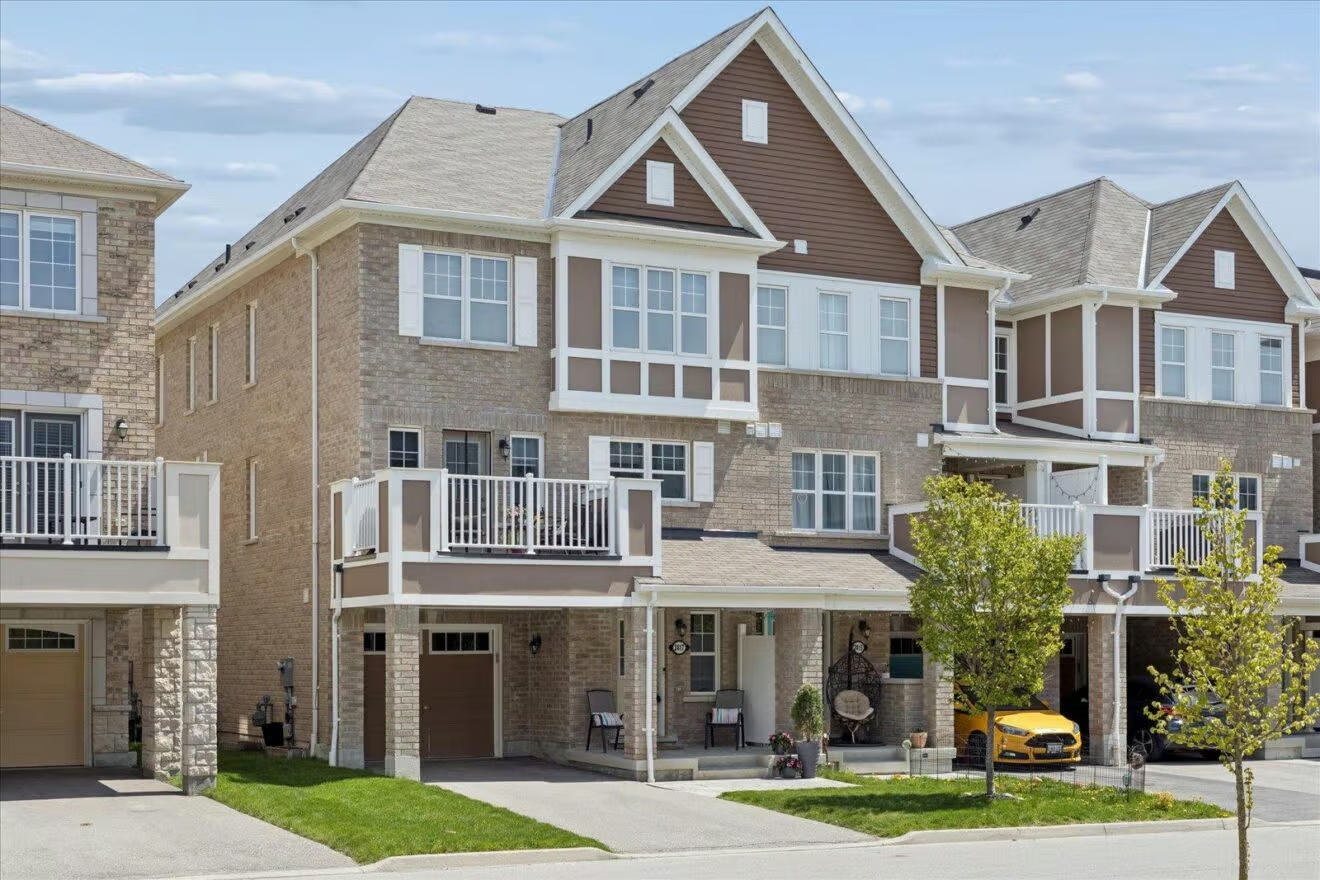
Pickering has become one of the most welcoming and culturally vibrant communities in the GTA. With a rapidly growing South Asian population, strong cultural community centres, diverse places of worship, excellent schools, and direct GO Train access to Toronto, it offers the best of both worlds — suburban space and urban connectivity.
New developments in areas like Seaton Pickering offer brand-new homes in planned communities with modern amenities — an attractive option for families who want to start fresh in a new neighbourhood that’s growing alongside them.
Work with a Real Estate Team That Understands You
At Team Rajpal, we’ve helped dozens of newcomer families and permanent residents navigate the process of buying their first home in Ontario. We understand the unique challenges you face — from building credit history to documenting overseas savings — and we know the Pickering and Durham Region market inside and out.
If you’re ready to learn more about how to buy a home in Canada as a new immigrant or permanent resident, reach out to Team Rajpal today. We’d be glad to help you take that next step.

Have Questions?
Reach out to our experts! Whether you need help with a transaction or you’re just looking for market information, we’re here to help.