





May 22, 2026 | Uncategorized
How to Downsize Your Home in Pickering: A Practical Guide for Empty Nesters and Retirees
The kids have moved out. The house feels bigger every year. And somewhere in the back of your mind, you’ve started wondering: is it time? Downsizing your home is one of the most emotionally and financially significant decisions you’ll make in your life — and yet, most of the information out there about it is generic, theoretical, and not remotely specific to what the Pickering real estate market actually looks like right now.
This guide is for empty nesters and retirees in Pickering and Durham Region who are seriously considering downsizing and want a practical, honest roadmap. How to downsize your home in Pickering involves more than just selling one home and buying a smaller one — and getting it right can mean the difference between a financial windfall and a frustrating, costly experience.
Why Are Empty Nesters and Retirees in Pickering Choosing to Downsize?
Before jumping into the how, it’s worth acknowledging the why — because the motivations vary, and they affect the strategy.
Some of the most common reasons homeowners in Pickering choose to downsize include:
- Reducing maintenance burden: A 4-bedroom detached with a large yard is a lot of work. As the years go on, many homeowners find they’re spending weekends on maintenance instead of enjoying retirement.
- Freeing up equity: Pickering detached homes have appreciated significantly over the past 15 to 20 years. Many empty nesters are sitting on $600,000 to $1,000,000+ in equity that’s tied up in their home. Downsizing frees that equity to enhance retirement security, supplement income, or support their children’s own home purchases.
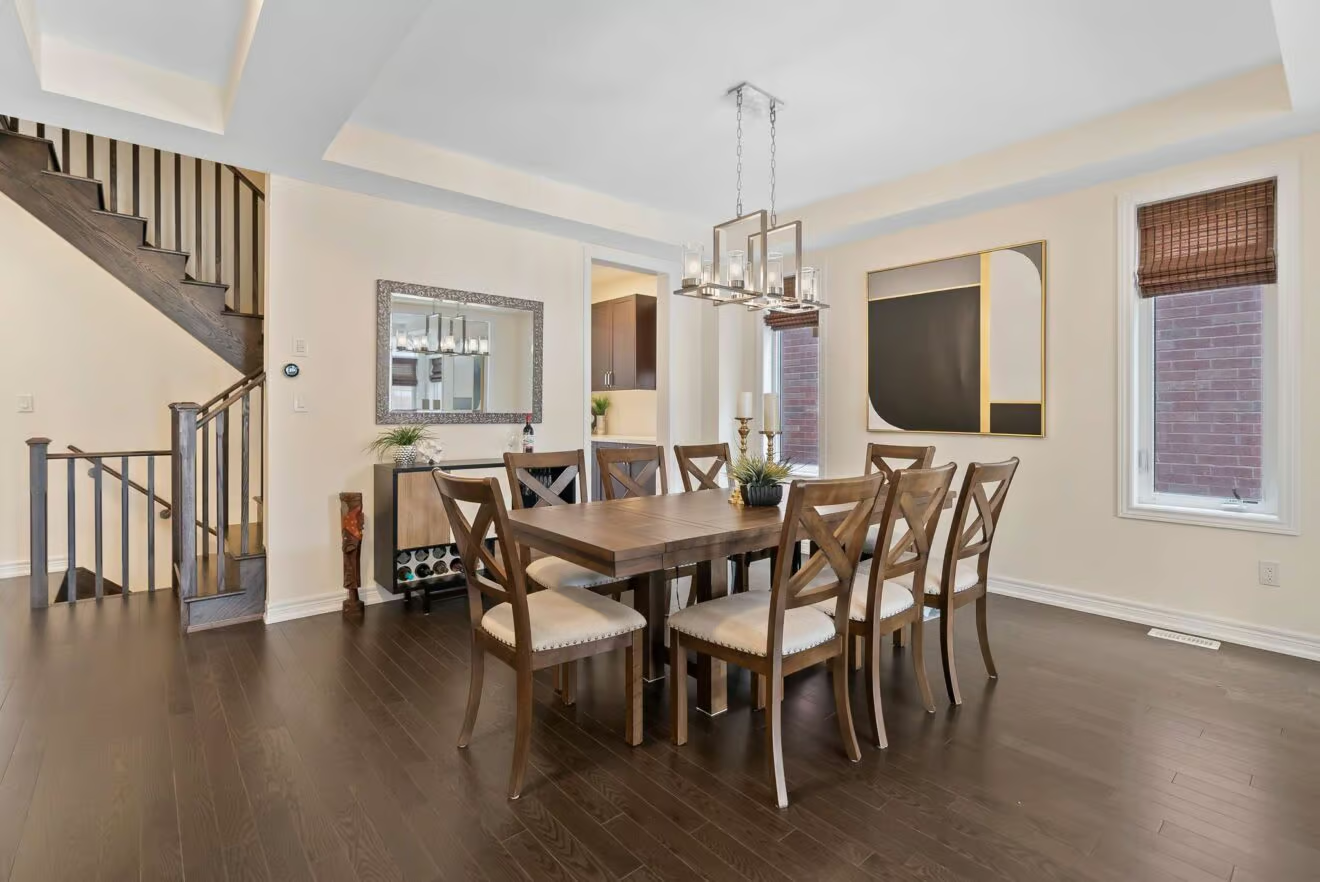
- Right-sizing the space: A home that was perfect for a family of four becomes a lot of unused square footage once children leave. Smaller, well-designed homes are easier to maintain, more energy efficient, and often more enjoyable on a day-to-day basis.
- Lifestyle shift: Many retirees want less outdoor space, single-level living, and proximity to amenities they now prioritize — like walking paths, medical facilities, restaurants, and community activities.
- Financial planning: With interest rates, cost of living, and retirement income all factors, restructuring your housing costs can significantly improve your financial flexibility.
Step 1: Know What Your Current Home Is Worth
The starting point for any downsize plan is understanding what your current Pickering home is worth in today’s market — not what it was worth during the 2021–2022 peak, and not the assessed value from MPAC. A current market evaluation from a local agent who actively sells in your specific neighbourhood gives you the real number you need to build your plan around.
Pickering detached home values in 2026 vary significantly by neighbourhood, lot size, condition, and renovation level. Getting an accurate number early allows you to model your financial scenario: if you sell for X, and buy your next home for Y, here’s what your net equity position looks like — and here’s the income that freed-up capital can generate.
Step 2: Define What “Right-Sized” Looks Like for You
Downsizing doesn’t mean going tiny. For most empty nesters and retirees in Pickering, the move is typically from a 4-bedroom detached home to one of the following options:
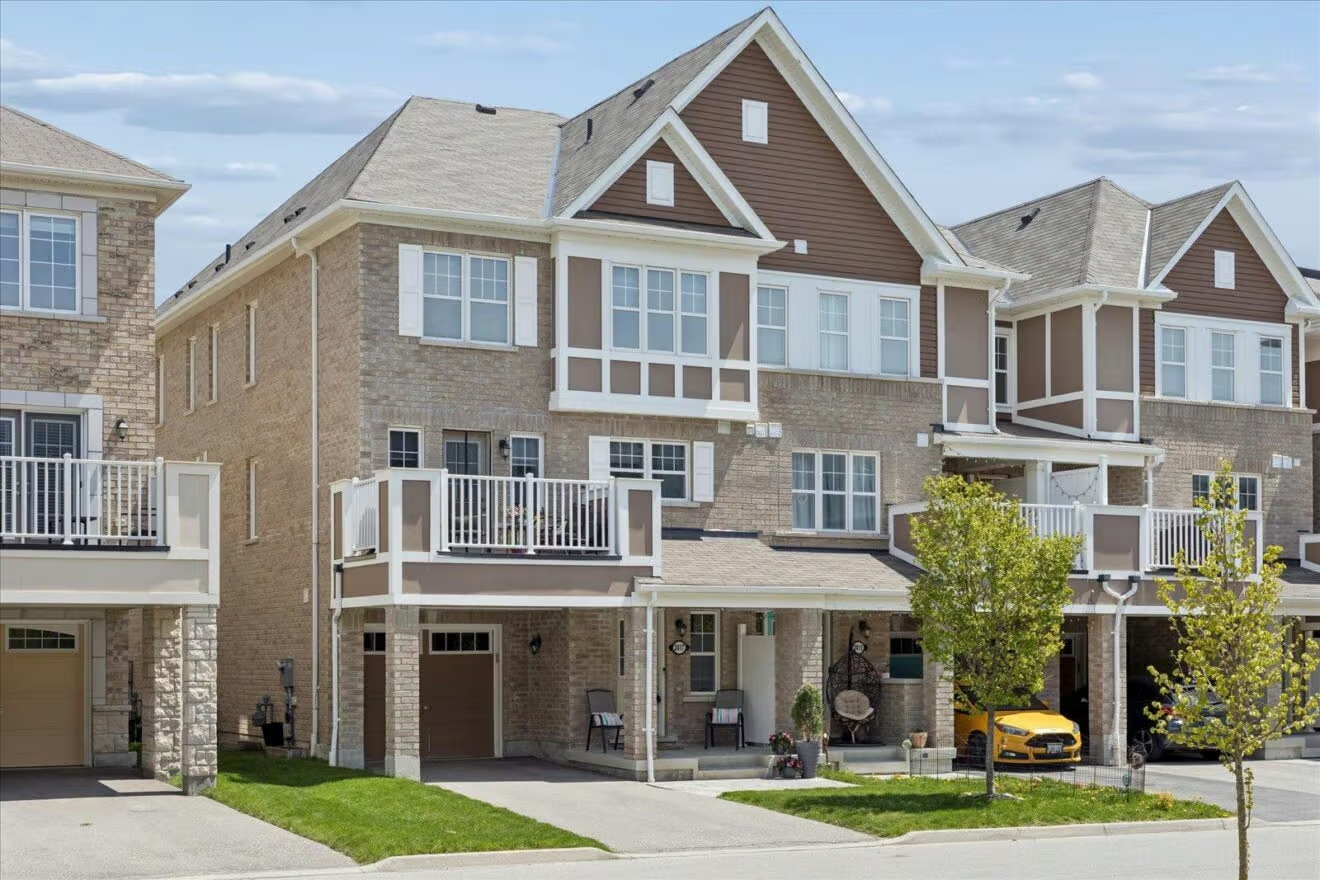
Townhouse (Freehold or Condo)
Townhouses offer a good balance of space and reduced maintenance. A 2 or 3 bedroom townhouse in Pickering typically runs $720,000 to $875,000 for freehold or $600,000 to $780,000 for a condo townhouse. Condo townhouses in particular appeal to downsizers who want the exterior maintenance handled — no lawn mowing, no snow shovelling, no gutter cleaning. You simply lock up and leave when you travel.
Bungalow (Detached Single Level)
Single-story living is increasingly important to buyers who want to age-in-place comfortably without worrying about stairs. Quality bungalows in established Pickering neighbourhoods are in high demand and relatively limited in supply, which means they hold their value well. Expect to pay $850,000 to $1,100,000+ for a well-maintained detached bungalow in Pickering in 2026 — sometimes more for renovated examples in desirable areas.
Semi-Detached Bungalow or Bungaloft
A bungaloft — a home with a main floor primary bedroom and a loft area above for guests or a home office — is a popular compromise. It offers the main floor living many downsizers want without completely giving up upper-floor space for when the grandchildren visit. Semi-detached versions offer a slightly lower entry price point.
Condominium Apartment
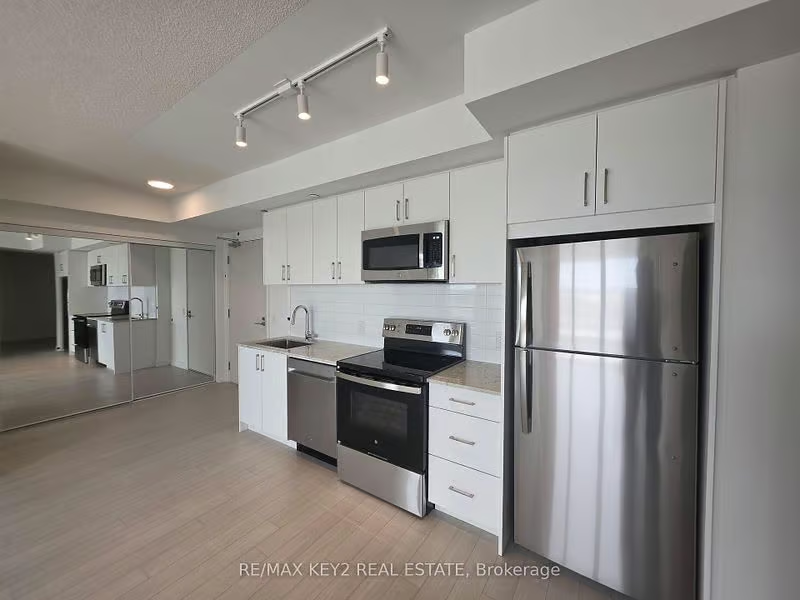
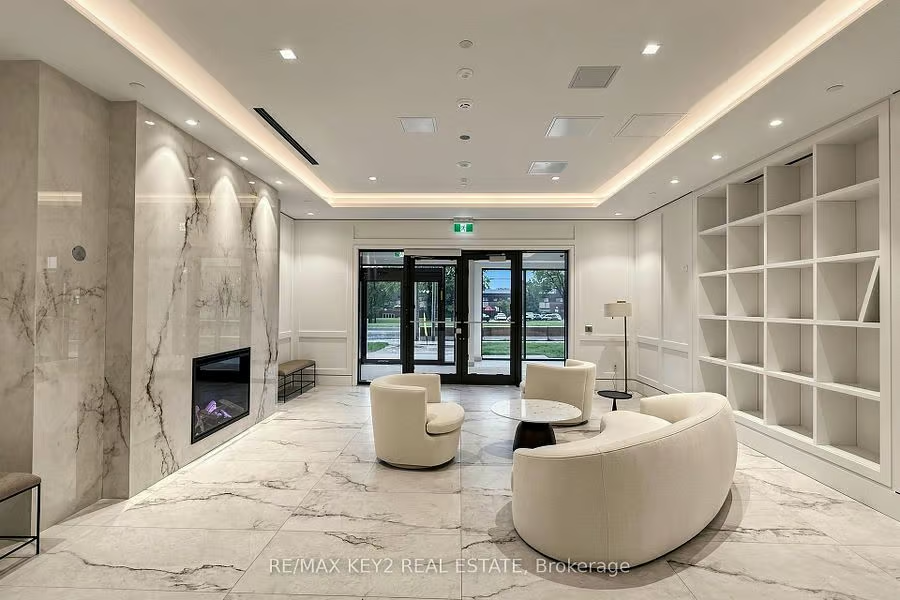
Some Pickering downsizers are making the full move to condo living — particularly those who travel extensively, want zero exterior maintenance, and prioritize amenities like exercise rooms and social spaces. The Pickering condo market in 2026 offers options in the $450,000 to $750,000 range depending on size and building. Monthly condo fees will be a new budget consideration, typically $500 to $900 for a quality building.
Step 3: Think About the Timing — Do You Sell First or Buy First?
This is one of the trickiest aspects of any downsize plan, and it’s worth thinking through carefully with your agent.
Selling First
Selling before you buy gives you certainty about your budget and eliminates the risk of carrying two homes simultaneously. The downside is that you may need to rent temporarily if your purchase takes longer to find than expected. In Pickering’s current market, renting short-term between transactions is a real possibility and worth having a contingency plan for.
Buying First
Buying first eliminates the stress of a timeline — you find the right home before it’s gone and move on your own schedule. The risk is bridging the financial gap between your purchase closing and your sale closing if they don’t align. Bridge financing from your lender can cover this gap, but it comes at a cost. Your agent and mortgage broker can model this scenario for you so you know what you’re working with.
Coordinated Closing Dates
The ideal scenario for most downsizers is a coordinated closing — you sell your current home with a closing date that aligns with or immediately follows your purchase closing. This requires good planning and some flexibility, but it’s entirely achievable with an experienced agent managing both sides of the transaction.
Step 4: Plan for the Costs of Downsizing
Many empty nesters assume downsizing is purely a financial windfall — and while it often is, there are costs on both the sell and buy side that need to be factored in:
- Real estate commission on your sale: Typically 3.5% to 5% of the sale price, split between your listing agent and the buyer’s agent
- Land transfer tax on your purchase: Unless you’re a first-time buyer (most downsizers are not), you’ll pay the full Ontario land transfer tax — approximately $9,000 to $16,000 depending on the purchase price of your new home
- Legal fees: Both for your sale and purchase — budget $3,000 to $5,000 combined
- Moving costs: Professional movers for a full house contents typically run $1,500 to $4,000+ depending on complexity
- Pre-listing preparation on your current home: Decluttering, cleaning, minor repairs, and staging investment
- Capital gains tax consideration: If the home you’re selling has been your principal residence throughout your ownership, you are generally exempt from capital gains tax on the proceeds. This is a significant benefit worth discussing with your accountant.
The Emotional Side of Downsizing: It’s Real and It Matters
We’d be doing you a disservice if we talked only about the financial mechanics and ignored the emotional reality. For most empty nesters and retirees, a family home holds decades of memories — birthdays, holidays, the rooms where children grew up. Deciding to leave that home is genuinely meaningful, and it’s normal to feel a complex mix of excitement and grief about it.
Give yourself time to make the decision thoughtfully. Visit the types of homes you’re considering — don’t just look at them online. Imagine your life in that space. And when you’re ready, work with an agent who understands that this transaction is about more than square footage and closing dates.
Why Now Might Be the Right Time for Pickering Empty Nesters
The current market in Durham Region in 2026 actually offers some advantages for downsizing sellers. While the market has softened from its 2021–2022 peak, detached homes in established Pickering neighbourhoods continue to hold strong values — and buyers in the $900,000 to $1,200,000+ range are still active. Meanwhile, the townhouse and bungalow options you might be moving into are pricing more accessibly than they were two years ago, which improves your financial position on the buy side as well.
Timing is always imperfect — but the best time to downsize is when it’s right for your life, not just when the market peaks.
Ready to Start Your Downsize Journey in Pickering?
At Team Rajpal, we have deep experience helping empty nesters and retirees navigate the full downsize process in Pickering and across Durham Region. We understand the financial stakes, the emotional weight, and the logistics involved. Whether you’re just beginning to think about it or ready to make a move, we’d love to be part of your journey.
Ready to explore how to downsize your home in Pickering? Reach out to Team Rajpal for a private, no-pressure consultation tailored to your specific situation.

Have Questions?
Reach out to our experts! Whether you need help with a transaction or you’re just looking for market information, we’re here to help.